B2C CRM Software for High-Volume Consumer Businesses
Most CRM software is built for B2B sales, leaving high-volume retailers to struggle.
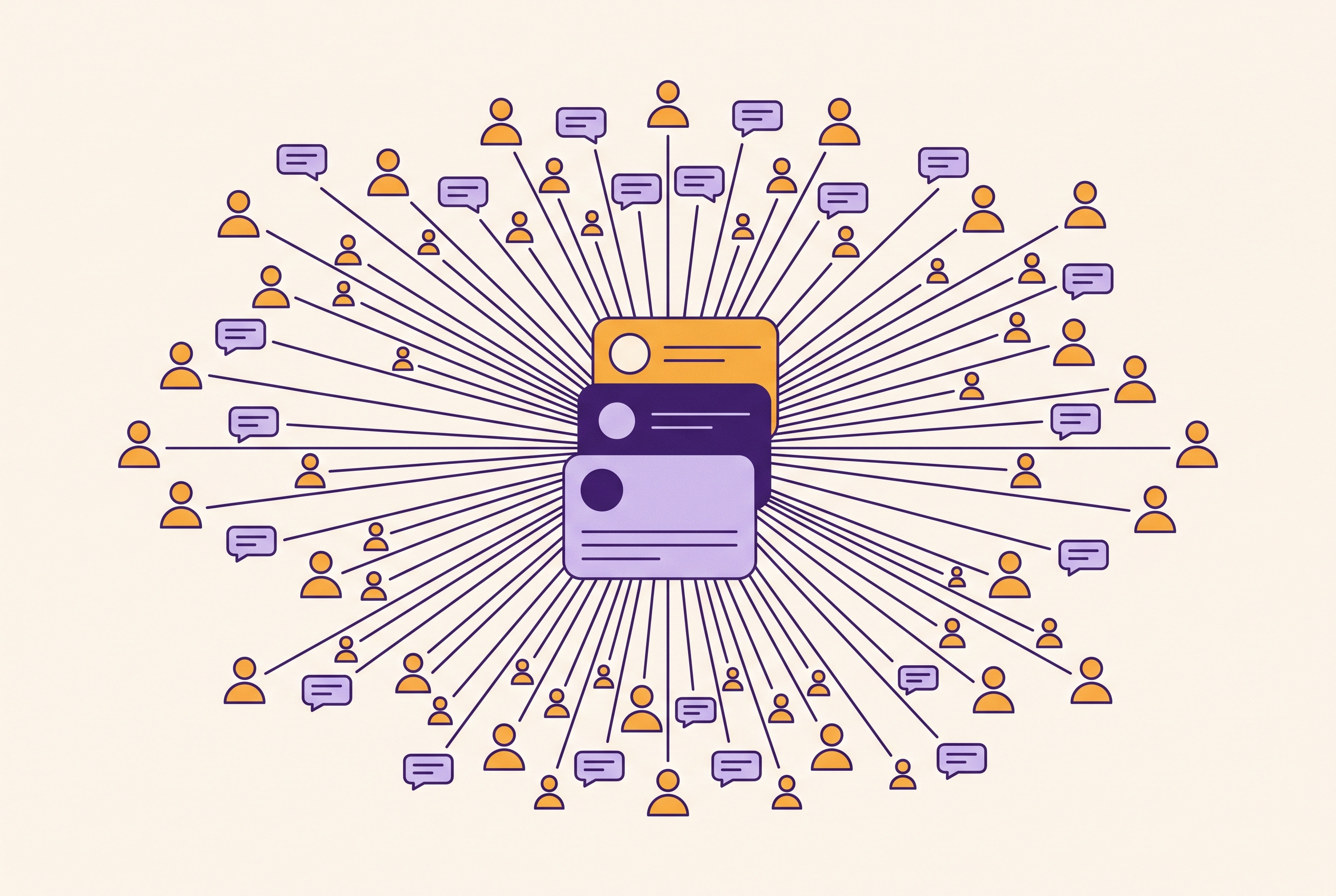
Large-scale consumer companies still pay for CRM software made for the wrong task, and that gap hurts. Software meant for one rep’s forty accounts and a half-year sales process is a poor fit for following a million shoppers live as they navigate checkout.
Why B2C and B2B CRM requirements are structurally different
B2B CRM platforms embed presuppositions within their schema, workflow architecture, and analytics: extended sales cycles, multiple decision-makers approving each transaction, plus few high-value accounts. Deal progression across pipeline phases gets monitored by these systems, since individual opportunities represent the core B2B metric. Closing one corporate deal might demand half a year with five stakeholders involved, while the platform orchestrates this gradual, consequential journey.
Consumer businesses work by a different logic. One person makes the call. The purchase often takes seconds, not months. Instead of a few hundred accounts, the database may contain millions of separate people, none carrying much value alone. Capsule's 2026 guide draws the line clearly: a B2C CRM is not about closing more deals. It exists to transform a one-time buyer into a repeat customer by delivering communication that is timely and genuinely relevant to them. That shifts the mandate away from pipeline management, where the underlying question changes from "how do we move this deal forward" to "how do we keep this person engaged after they've already bought."
Monday's B2C CRM guide lays out the same contrast from another angle. B2C businesses deal with far more leads, each worth less individually, moving through pipelines that are short and don't need the multi-month nurturing B2B requires. B2C also depends on integrating social platforms, e-commerce storefronts, and other consumer-facing channels that most B2B software never prioritizes, because B2B software was never built to need them.
This goes beyond surface-level differences. This is embedded in the data model, where B2B CRM is built around accounts, whereas B2C CRM centers on individual contacts. The same holds for automation: B2B platforms alert a rep if a deal lingers too long in one stage, whereas B2C platforms must trigger a message the moment a shopper leaves a cart behind or views a product category. The same applies to which integrations a platform deems essential. Many vendors respond by asserting their platform can adapt to cover both sides. But adaptability demands setup work, and setup work at B2C volume, spanning countless contacts plus behavior-driven triggers that must go off instantly, is exactly the point at which all-purpose platforms typically collapse under real-world pressure.
The four operational profiles within B2C
The label "B2C" covers businesses that, operationally, may share next to nothing. An e-commerce brand shipping ten thousand orders daily and a yoga studio with a forty-person clientele both count as B2C, yet what they need from software is nearly the reverse. So when a CRM buyer weighs platforms, what really matters is whether one suits the specific type of B2C company at hand.
Capsule's 2026 guide maps out four types of business in this space. For B2C service providers, from coaches and therapists to tradespeople and personal trainers, the work is about knowing a limited client roster in depth. Here, a CRM should hold those specifics and surface the next timely nudge, not churn through high volume. For local shops, salons, restaurants, and boutique hotels in the SMB retail and hospitality world, the CRM value lies in the little prompts that bring someone back after one visit, whether that is a birthday offer or a well-timed "we haven't seen you in a while" message. For subscription and membership businesses, keeping renewals healthy means the CRM must spot silent members early and help prevent churn.
E-commerce, the fourth profile, operates at its own tempo. Because transactions close in minutes rather than weeks, automatically handling abandoned carts, shipping notifications, and after-sale outreach represents the minimum any system needs to match how fast these companies move.
Each profile demands its own core strength, whether that means deepening client ties in service firms, reaching local shoppers with relevant messages at the right moment, running e-commerce operations nonstop, or spotting subscription churn early. What follows concentrates on online retail and recurring-billing models, since rapid, heavy transaction flows stress any CRM most severely, and a poor choice there inflicts harm faster than anywhere else.
What high-volume B2C operations require from a CRM at the functional level
A CRM that's built to thrive in high-volume B2C, not just survive it, needs these: storing millions of contacts, triggering messages from behavior, unifying channels across the board, and using data in real time.
As Monday's guide points out, a CRM's fundamental purpose is keeping track of buyers, prospects, and business entities. Handling millions of entries at consumer scale makes this task far tougher, since organizing them must not degrade performance. Relying on static groups refreshed only during nightly batch processing won't cut it. If someone completes a qualifying action, such as buying again, they must be recognized in their updated group immediately rather than waiting half a day for the next scheduled update.
What makes a database useful at speed is behavioral triggering. The CRM has to function like a conditional logic machine: when someone leaves items behind, it sends an email; when someone browses the same category on three separate occasions without purchasing, it triggers an SMS; when someone passes a loyalty milestone, it dispatches a reward alert. No staff could possibly monitor and react to all these signals as a scaling consumer business produces them. Automated workflows driven by behavioral triggers are how the system keeps pace.
Connecting every channel mirrors how shoppers move in practice: someone may begin on a website, shift to an app, then turn to SMS, email, social channels, or a store visit while expecting the brand to know it is still them. When the CRM records just a single touchpoint, its view of the customer stays partial, so the resulting choices often miss the mark. Lark’s guide to B2C CRM describes cross-channel capabilities as core here, so teams can reach people through chat, email, or social channels and automate replies when recognized behaviors surface.
Instant information completes the feedback cycle. Tailoring a promotion based on actions taken moments earlier succeeds, whereas relying on yesterday's behavior breaks down if the platform updates only at night. Monday's guide treats live analytics as essential because teams have to see right away which strategies work and how their group is doing. CRM alongside customer data platforms plus marketing automation now merge into unified suites, because using distinct tools per function causes delays and scatters one buyer's profile among systems that fail to communicate fast enough. Monday's guide further highlights that B2C uniquely demands links to online shops and social networks, forcing the CRM to ingest information from retail sites, billing services, and consumer apps that typical B2B software was never designed to reach.
Instead of a few hundred accounts, the database may contain millions of separate people, none carrying much value alone.
AI and agentic automation in B2C CRM
For B2C CRM, AI has shifted from a helpful extra to a core architectural requirement. The benchmark now belongs to platforms that make AI part of the underlying data foundation, not a cosmetic layer on the user interface, and that reset expectations for high-volume consumer-business software.
The biggest impact of AI here comes from automating behavior across huge volumes: software agents that customize messaging for millions of contacts simultaneously, adjusting when, where, and what gets sent according to signals unique to each individual, with nobody signing off per message. Forecasting tools that flag likely churners, repeat buyers, and the highest-value segments are becoming table stakes across the platforms this article goes on to survey. Lark's guide to B2C CRM singles out automated workflows, among them campaigns set off on their own by live data, as what marks the top platforms, and observes that marketers with no technical background can set behavioral logic running without any code.
Selecting a CRM today also means settling on the AI infrastructure. Its data model should equip AI agents with one up-to-date customer view, instead of making them work from scattered information spread among separate tools. A caveat remains: vendors often reserve AI features for a platform's costlier plans, and teams with access still see little return if marketing cannot set them up properly. The smarter choice is a platform whose AI the team can put to work, not simply one that includes it.
It is fair for some businesses to question if the time has come for these tools. Once a B2C company starts handling more customer activity, running behavioral triggers by hand eventually gets too tangled, often earlier than founders expect. At that stage, AI-driven automation becomes part of the operating foundation for any company at scale, ready before growth overwhelms it.
The pricing model shift that high-volume B2C businesses must factor into platform decisions
CRM pricing is no longer built around flat per-seat licensing and now runs on usage, AI, or outcome-based fees, which makes a platform's overall cost harder to predict for any big consumer business as automated messaging keeps rising.
Pricing by the seat makes budgeting simple: whatever the headcount, the group pays one fixed monthly amount, regardless of database size or the volume of automated sends. Usage- and agent-priced models take another approach: the bill scales with stored contacts, messages sent, API traffic, and how often the platform's AI agents run interactions, all of which climb as a consumer operation expands.
That difference matters most when a company is growing. With usage-based pricing, a B2C company whose customer base doubles may find its CRM costs climbing past double, whereas identical growth on a seat-based plan could add nothing to the bill. Merging CRM with CDP and automation tools into one platform can reduce overall stack expenses, even if that platform costs more upfront than each individual tool it supersedes, since it eliminates expenses tied to transferring data across systems, supporting multiple integrations, and fixing duplicated contact entries. When assessing a CRM, companies ought to project expenses based on anticipated workloads and results instead of present staffing levels, because these agreements may expand in manners that per-seat financial plans cannot match.
How the leading B2C CRM platforms compare
No platform meets every requirement set out above. Which platform to pick depends on company size, available engineering capacity, and the priority, such as workflow automation, supported channels, setup simplicity, or data unification, that carries the most weight.
By uniting its Service, Marketing, and Data Cloud offerings, Salesforce delivers large B2C operations a unified consumer profile spanning revenue, support, and rewards initiatives, while Einstein AI drives predictive analytics. Such an expansive system demands sizable consumer brands staffed with specialized engineering and promotional groups capable of setting up and managing it.
Klaviyo works best for e-commerce brands whose stores use Shopify, built primarily around email and SMS. It still lacks built-in push notifications, but Klaviyo has added personalized site experiences alongside WhatsApp, channels that keep gaining importance for brands trying to connect every customer touchpoint.
With a mobile-first design, Braze is set up to reach consumers in real time across WhatsApp, SMS, email, push notifications, and messages delivered inside the app. That mix suits B2C brands built around mobile, whose customers spend most of their time inside the app, and where outreach has to be frequent and quick.
Insider, following its December 2025 rebrand, is a customer engagement suite hosted in the cloud, combining data, AI-driven personalization, journeys across every channel, and behavioral analytics into a single product. It covers territory Klaviyo leaves untouched, offering tailored on-site experiences plus WhatsApp capabilities that outpace Klaviyo's simple native integration, making it a solid fit for mid-sized and larger consumer companies past the point of juggling separate tools per channel and ready to run the entire customer journey from one system.
Zoho CRM distinguishes itself through deep customization, serving companies whose sales processes or audience segments don't align with what pre-built solutions typically manage well. Zia, the platform's AI assistant, surfaces behavioral patterns and pinpoints which segments and campaigns generate repeat business. But this flexibility comes at a price: unlocking Zoho's full potential demands significant setup work, meaning companies that need immediate functionality must balance that initial investment against the eventual returns. Zoho best serves budget-aware SMBs alongside mid-market B2C organizations possessing the in-house expertise needed to tailor the system to their specific workflows.