CRM Platforms Built for SaaS and Subscription Businesses
Native billing integrations and MRR tracking help subscription teams spot churn before it happens.
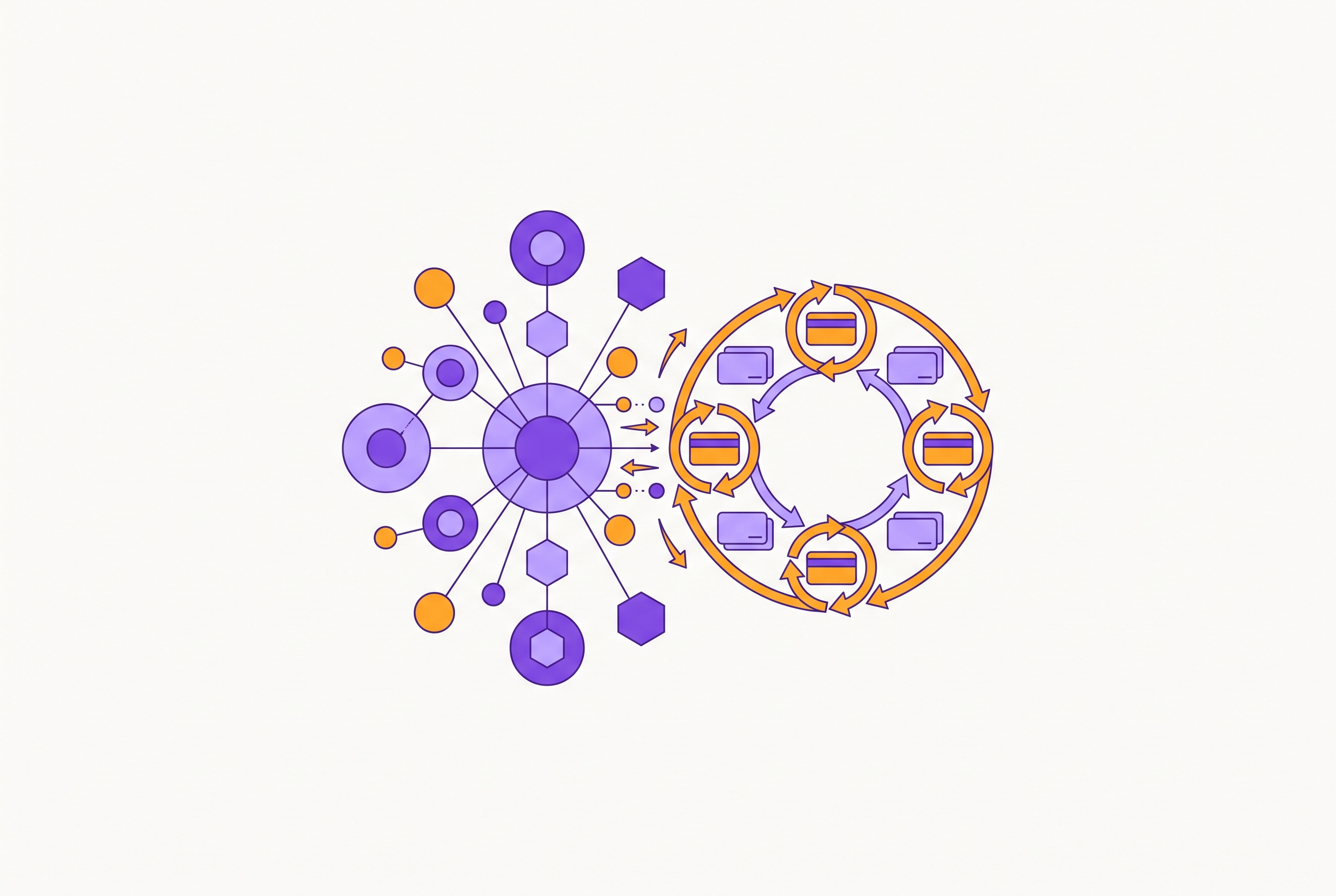
Subscription CRMs either work, or they fail based on one thing: does signing the deal start something lasting, or just finish a sale? For selling one-time products, the CRM follows each sale until it's won and then stops paying attention. For recurring revenue, a CRM built around it stays active across onboarding, renewal, expansion, and the chance a customer drops out with two-click cancellation. Whether a platform was built for it from day one, not how long its feature list runs, separates platforms made for SaaS teams from those bolted on later. Many vendors in this market are still adapting rather than making from scratch, while buyers who miss that gap end up with a help queue packed with unexpected cancellations.
Old CRM tools assume value moves once: a prospect arrives, sales handles it, the sale closes, then they go dormant till somebody remembers setting up renewal talks. Revenue from subscriptions works differently. Here, Revenue keeps changing, up, down, or gone, depending on what the customer thinks of this product each month. A CRM that can't model that ongoing relationship, cancel-anytime option included, leaves gaps exactly where subscription businesses lose the most money: the space between "deal closed" and "renewal due."
According to Recurly's 2025 Churn Report, B2B SaaS has a median churn rate of 3.5%. What really matters is this gap: a company losing 3% of customers to churn versus 8% can see valuation multiples differ by 2 to 3x. A CRM is just one variable across the gap, yet it's usually what lets a company spot churn early enough to respond, instead of learning through a cancellation note in the support's queue.
The capabilities that actually separate subscription-native CRMs from general-purpose tools
Look at the file first. With any CRM built for subscription-native teams, plan level, user total, billing cadence plus renewal day live inside each customer profile, not kept away where the CRM has no view. On paper, it's a minor design call. Instead of pinging finance to ask which plan someone's on, sales, support, plus customer success teams work using the same facts right when they open any record.
Pipeline value needs to shift as well. For each subscription business, one-time size matters less than new, dropped, or grown MRR and ARR. When a CRM can only sum deal totals, any prediction built from its numbers will mislead. Billing is similar: native links with Stripe, Chargebee, and Recurly bring billing data inside the CRM, with no person exporting one CSV each Friday.
When handling Product usage data, general-purpose tools usually fail. Milestones, adoption curves by feature, every usage drop-off, all this needs to reach their profile and set off a follow-up, not wait in some product analytics dashboard sales won't check. Scoring for churn works the same way: at-risk warnings have to appear before that customer writes to leave, not after. The same goes for expansion tracking. Upsell chances should be based on behavioral signals, like a group with 12 new users by month end or one customer near its usage limit instead, rather than a standard quarterly check-in plan made six months back.
This all falls apart when marketing, the help desk, success teams, and sales each see their own picture of the buyer. With a common data model, handoffs keep every detail, and whoever is renewing the deal can see which issue was raised recently. Here, Speed matters more than across many B2B motions: a ready SaaS prospect is tied to ARR, which can quickly evaporate when slow follow-up drags; therefore automation must cut that lag, not just record it for later.
For those weighing vendors against a feature checklist, this stings: many tools marketed to SaaS companies natively build in only a few of these. Everything else is bolted together, patched over, or stuck inside an automation flow built ages back that the whole team avoids. Find out if a feature comes native or arrives duct-taped. Few vendor pitches welcome having that one raised in public.
How churn benchmarks reveal what the CRM needs to do

The 2025 Recurly Churn Report puts median churn at 3.5%: 2.6% customer-chosen, with involuntary at 0.8%, while that median hides a lot. Developer tools see roughly 1.8% churn each month, since that product stays embedded throughout someone's workflow and moving away is hard. For back-office SaaS in HR, the monthly figure is around 4.8%. Sales and Marketing tools range from 4.8% to 8.1%. Monthly churn for Healthcare SaaS is 7.5%. At 9.6% monthly, EdTech leads the list.
Most buyers slip up by viewing churn-prevention as optional, but that gap means it scales by industry rather than being a feature you rank between vendors. A group offering developer tools with 1.8% monthly churn may use a less intense health-scoring rhythm compared with one in EdTech seeing about a tenth of its customers leave each month.
Expansion rounds out the rest of that picture. ChartMogul's H1 2024 data shows companies with net revenue retention of 100% or more expanded at over twice the pace of companies under that mark. Expansion revenue fuels how companies grow, not an extra metric kept and tracked in one spreadsheet, but belongs live inside your CRM with the new business pipeline.
That 0.8% of the median called Involuntary churn usually tops the list as the easiest thing to handle, yet it's what most teams keep undone. A CRM wired straight into the billing layer can kick off dunning workflows ahead of a declined card becoming a gone customer. It isn't churn prevention as health-scoring sees it. It's plumbing, yet most general-purpose CRMs lack it.
A business down 9.6% in monthly revenue needs a fundamentally distinct churn-detection approach than one at 1.8%. Judging CRMs using a one-size checklist ignores such gaps, and because it's why companies pick software that seems great during a pitch but fail six months later.
According to Recurly's 2025 Churn Report, B2B SaaS has a median churn rate of 3.5%.
The six platforms built or adapted for subscription revenue, compared
Using Salesforce, paired alongside Revenue Cloud plus Agentforce, you get the deepest setup for complex pricing, but teams often choose it for things outside subscription needs. Revenue Cloud natively handles quoting, subscription pricing, and recurring billing while Sales Cloud drives the pipeline, with Einstein and Agentforce adding churn prediction alongside next-best-action guidance. Pricing runs roughly $100/user/month for Pro Suite, $165/user/month for Enterprise, and $330/user/month for Unlimited, with Revenue Cloud priced separately and Agentforce is available as a separate offering. Its Customization remains unmatched; the add-on ecosystem is too, but getting value from it usually means an in-house admin or an outside firm on retainer. Only mid-market or enterprise SaaS companies with complex pricing or multi-product catalogs able to absorb the overhead will find this platform worthwhile. Choose Salesforce when your business has already outgrown simpler tools, not since it's the brand people recognize.
ChartMogul CRM does the reverse: built just for SaaS in B2B, it links natively to over 25 billing platforms like Stripe and Chargebee alongside Recurly. No pricey add-ons get bolted on later. Billing data, not hand entry, feeds MRR and ARR, pipeline tracking, and customer segmentation, and it connects to Intercom, Segment, BigQuery, plus Snowflake for teams seeking analytics depth. It's less focused on sales workflow automation than full-platform CRMs; that's why it is usually paired alongside other tools rather than used outright. Ideal users: SaaS teams, data-driven ones, putting revenue analytics at the CRM's core, not a mere bolt-on report.
At budget-tier pricing, Zoho CRM suits teams already working inside Zoho’s ecosystem, starting at $14/user/month. Zia, the AI layer, brings data enrichment plus anomaly alerts and churn prediction. Here, Subscription-native depth is shallower next to ChartMogul and Salesforce's Revenue Cloud, while its churn tooling leans toward Zia rather than purpose-built scoring. It's a fair entry point if a budget-conscious SaaS startup is standardized on Zoho. Everybody else gets a bad deal disguised as an option.
From Freshworks, Freshsales handles invoicing and quoting in its Products module, with multicurrency, and a CPQ add-on using e-signature within the CRM platform. Rather than having its own native billing system, it handles Subscription work through integrations with outside tools. The suite also includes AI-powered next-best-action suggestions and scoring. A 21-day no-cost test opens up tiers from $9 per user per month. Sales-led SaaS teams can handle quoting plus pipeline visibility here, without heavy enterprise billing.
Insightly brings CRM and marketing together in a single platform, offering no-code customization plus over 200 pre-built integrations for SaaS tools, including billing, help desk, and email tools. HubSpot and Salesforce provide stronger churn-prediction tooling plus AI at similar tiers, a gap worth plainly naming rather than glossing past. It earns a berth for SaaS startups seeking a single unified platform, quick onboarding, and none of the enterprise overhead.
Where AI is changing what subscription CRMs can do for churn and expansion
AI churn scoring went from a paid feature to a basic need before many buyers saw it. Zoho's Zia and Salesforce's Einstein both have it built in, and the whole space is following suit. Bain & Company says AI-powered churn prevention efforts bring 4.3x ROI over 24 months, compared with deployment expense and kept account value. This figure shows why each vendor is rushing to add a prediction model, even if their data can't back it up.
The change runs deeper than flagging accounts at risk. When firms use AI-predicted lifetime value instead of fixed customer segmentation, customer lifetime value can increase by 20 to 35%. Unless behavioral signals, usage patterns, feature adoption, and login counts get ingested by the CRM instead of relying on firmographic data about company size or sector, that modeling fails. A CRM still scoring accounts on industry code and employee count is running last decade's playbook, and no amount of marketing language about "AI-powered insights" changes that.
These Purpose-built tools currently plug straight into that pipeline. Pendo Predict works with product usage data to predict likely churn, flag revenue in danger, and route signals to customer success teams' workflows. ChurnZero works the same way, pushing churn insights right into the CRM so teams who live inside it rather than another product analytics tool get them. AI-enhanced subscription churn scoring is projected to reach $7.48 billion by 2030, growing at a 24.1% compound annual rate, and platforms that don't build this in natively will lose ground to the ones that do.
When evaluating any CRM, one blunt issue comes up: does native churn scoring exist, or must you require bolting some third-party tool onto it? Each integration point brings latency plus data-sync exposure, and it hits just when speed matters most: the hours following a usage drop-off, while the customer is still weighing whether to leave. This holds true for expansion too. AI next-best-action tools, including Salesforce's Agentforce, can spot timing for upsell by reading usage patterns, in a categorically new way compared with someone manually scanning an accounts spreadsheet every three months.
Matching platform to motion: how to choose based on your GTM model and stage
Your go-to-market model matters more than Company size, so buyers using headcount usually pick the bad tool. With a product-led motion, the CRM needs to ingest product usage signals natively or through an integration. How complex your contracts get decides if Salesforce or Freshsales works for a sales-led motion built around quoting, outreach automation, and pipeline visualization. Say your motion is mixed, PLG plus a sales overlay: you then need usage signals plus the sales workflow sharing one data model. For big account-based sales with many decision-makers and hard quoting, Salesforce Sales Cloud is often chosen, even with its price and weight.
Stage matters just as much, and it's the variable most often ignored in favor of "what does the market leader use." Early-stage startups die on admin overhead, so ease of setup and a low-cost entry point matter more than a deep feature set. Once churn tracking is the metric the board watches, growth-stage companies demand billing integration that's reliable, and that's when ChartMogul proves why it belongs. Later-stage SaaS companies, optimizing net revenue retention plus expansion forecasts, often require deeper analytics.
Industry churn benchmarks shouldn't only guide which platform you pick, they should shape how urgent it feels too. An EdTech business watching churn of 9.6% monthly, or SaaS in healthcare losing 7.5% monthly, needs much stronger automation for health scoring than a company building developer tools at 1.8%. Side by side, every platform's feature list looks nearly the same. How long teams can wait before responding to a risk is completely different.
A few good questions see through vendor marketing language before you commit to a contract. Does the platform track MRR and ARR on its own, or does that need a workaround bolted on later? Does billing integration come native, and what tools work with it right away rather than being deferred to a roadmap someone's pitching for a later date? Can someone in revenue build churn alerts and risk ratings, or will every update need a developer to handle it? Does AI's churn model use product usage data as well, or just CRM records? Does the pipeline report let you track expansion revenue apart from new business, or is everything lumped in and buried?
No platform here is right in every case, and no vendor should say otherwise. For any ten-person startup, using Salesforce Revenue Cloud means overkill, while ChartMogul cannot satisfy the enterprise company that needs complex billing across multi-entity setups. Pick the tool where native functions match your business motion and current phase, not the one showing a huge feature list under its pricing sheet.
Sources
- Best SaaS CRM for SaaS Companies in 2026 | Freshsales
Provided details on Freshsales features including invoicing, CPQ, multicurrency, and pricing tiers.
- 5 best CRMs for SaaS startups & software companies (2025)
Informed the description of Insightly's unified CRM and marketing platform with no-code customization and pre-built integrations.
- CRM for SaaS companies: 14 top platforms for managing the customer lifecycle
Supplied the per-user pricing figures for Zoho CRM and Freshsales cited in the platform comparisons.
- A smarter CRM for selling more SaaS | ChartMogul
Provided details on ChartMogul CRM's native billing integrations, MRR/ARR tracking, and analytics connectors.
- https://stealthagents.com/research/ai-customer-churn-prediction-statistics-2026
Provided the Bain & Company statistic on AI-powered churn prevention delivering 4.3x ROI over 24 months.