Microsoft Dynamics 365 vs Salesforce for Enterprise Buyers
Each platform's origin story shapes its fit within your existing technology stack.

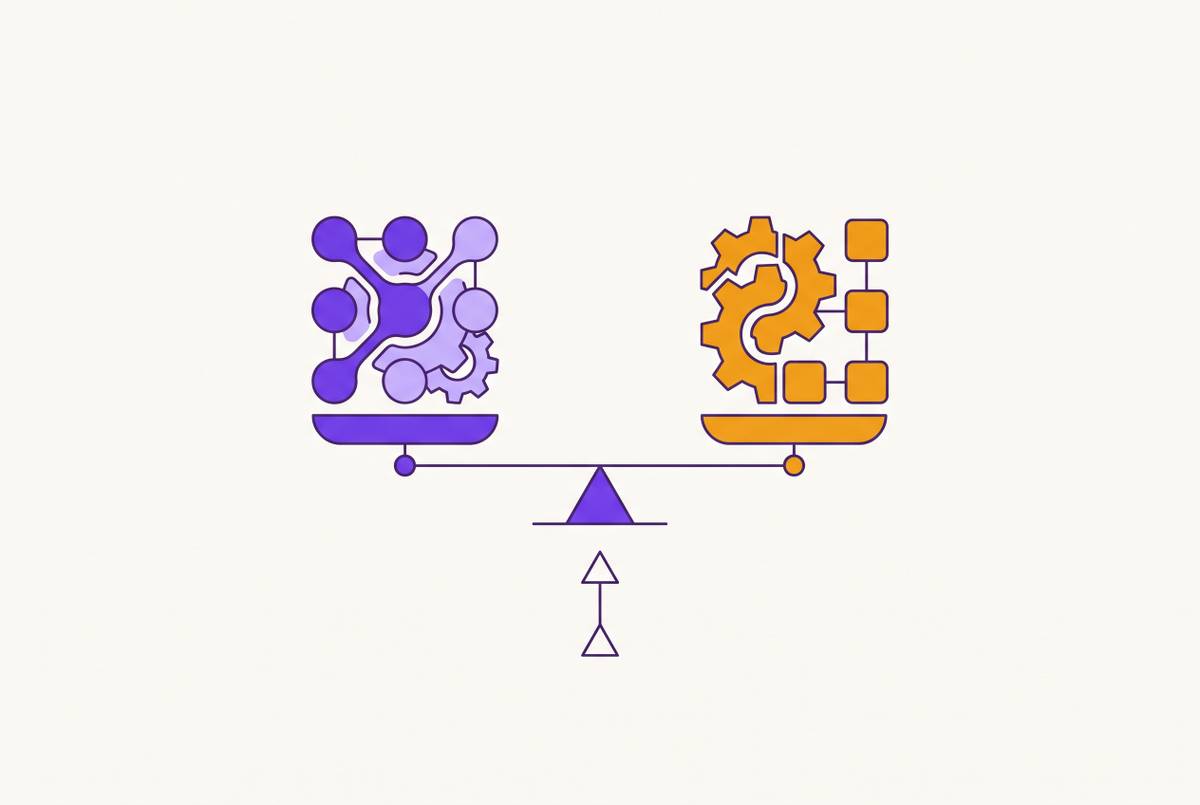
Most enterprise buyers begin with a feature matrix, comparing Dynamics 365 and Salesforce side by side as they expect one platform to pull ahead. In most cases, no clear leader emerges, which is the exercise’s first meaningful takeaway. Both platforms are Gartner Magic Quadrant leaders, and each covers nearly the full range of work expected from enterprise customer-facing teams. The tally remains nearly balanced, leaving buyers with plenty of checked boxes but no decision.
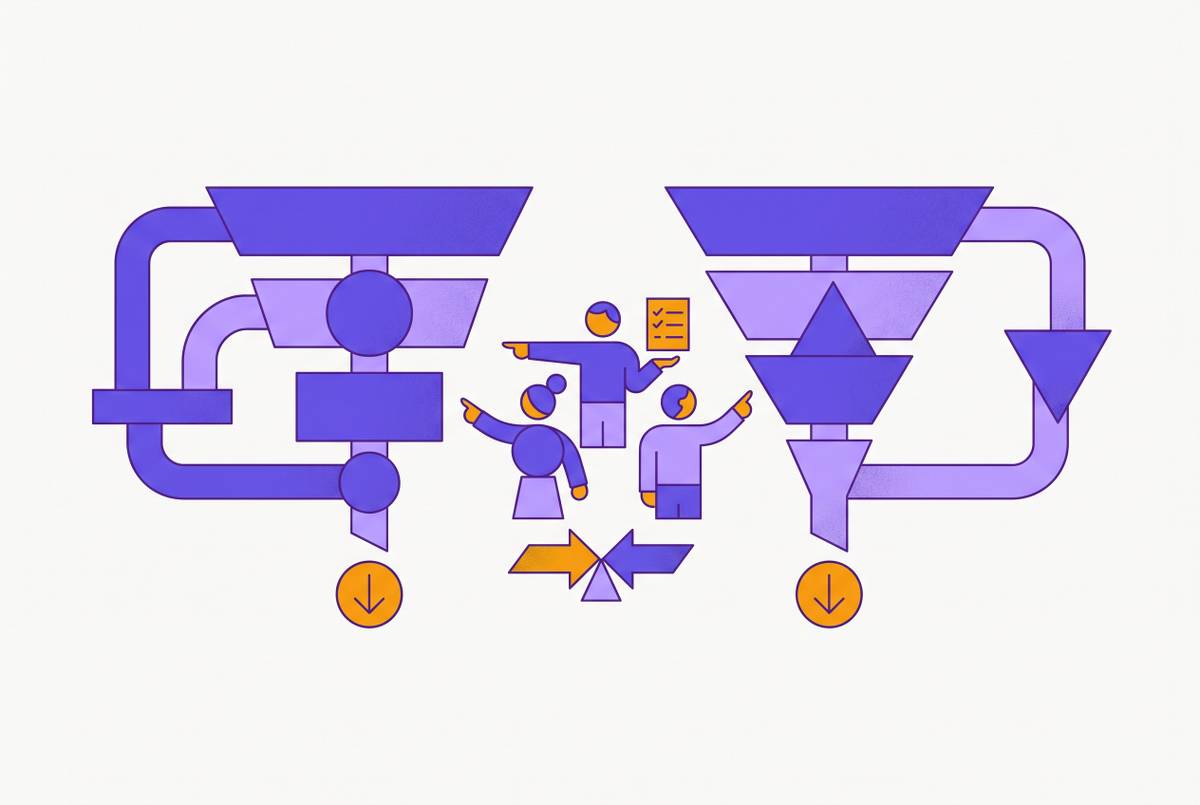
The buyer started with the wrong question. Treating Dynamics 365 alongside Salesforce as interchangeable products vying for aesthetic superiority misses the point. They embody distinct philosophies for structuring client information, each rooted in a separate corner of enterprise computing. Salesforce expanded its CRM foundation to cover adjacent business areas. Dynamics 365 embedded customer management within the infrastructure companies already used for accounting, logistics, and daily workflows. This divergence in starting points dictates future expenses for connecting tools, oversight frameworks, AI data anchoring, and long-term ownership costs.
An organization should start by mapping the systems that already anchor its information: the identity provider, the analytics tooling, the ERP system, and the integration infrastructure. This article offers a framework of four parts shaped by that inquiry, letting a buyer weigh it against their existing technology landscape to find what the feature matrix never revealed.
How each platform's origin shapes what it is today
Over the past two decades, Salesforce has grown from its CRM roots into related areas of business software. The main portfolio includes Sales Cloud and Service Cloud alongside Marketing Cloud and Commerce Cloud, while Data Cloud plus Agentforce provide shared capabilities across the suite. Those CRM origins still underpin Salesforce's edge: robust customer-management features, seasoned tools for managing pipelines and forecasts, and AppExchange, a marketplace where outside vendors offer thousands of applications that broaden Salesforce's native capabilities.
Dynamics 365 has a separate origin story. It treats CRM as merely one module in a wider suite, with the whole system oriented around broader operations. Integration tooling links the ERP side with Dataverse: dual-write serves Supply Chain Management and Finance, while sync mappings handle Business Central. The front and back offices run on separate data stores, yet both sit on a single platform with a common security model and a shared reporting layer.
That architectural choice matters in the sections ahead. Dynamics 365 natively aligns CRM records with ERP data for analysis because the platform is built that way. Salesforce usually keeps ERP beyond the platform boundary, so teams must create that comparable join themselves. Both ways can be valid. They instead point to competing assumptions about whether customer records belong alongside the company’s other operating systems.
Where each platform stands in the market
An enterprise buyer faces no risky or unproven choice here, since both platforms dominate the corporate CRM landscape. Dynamics 365 maintains its standing through strong financial gains and by benefiting from the wider Microsoft environment businesses already operate. Gartner's August 2026 Magic Quadrant covering CRM Sales Platforms placed only Salesforce and Microsoft among its top-tier Leaders, marking the twentieth such recognition for Salesforce and the sixteenth for Microsoft.
Dynamics 365 is growing in revenue while CRM share rankings can point elsewhere, and buyers may read that mismatch as a flaw when they miss the context. Microsoft records many modules within wider enterprise agreements rather than as standalone CRM purchases, so falling share can coexist with rising adoption. That makes the share metric a weak stand-in for the platform’s real expansion among companies already using Microsoft 365.
Both vendors in this comparison carry adoption risk, and neither one comes out ahead. Buyers ought to view the risk as a given, handling it via governance and change-management practices.
The four architecture dimensions that drive the decision
EPC Group’s field guidance from 1,200-plus Microsoft projects presents this comparison as an architecture decision across four dimensions. They consider where company-specific grounding for AI resides, how CRM data connects with the wider analytics environment, each platform extension layer's integration costs and identity boundary, plus total stack cost over five years.
No dimension among the four carries a single right answer that fits every enterprise. Each one turns on what the buyer's environment already has in place, so the framework pays off when brought to a particular estate instead of being treated as a blanket ruling. An organization whose foundation is Azure, Power BI, and Entra ID answers the four questions in its own way, just as one built around Tableau plus a mixed best-of-breed setup does, and whichever conclusion each reaches can be right for that organization.
Most large enterprises deploy each platform to some degree. For most buyers, the real question is not whether to pick between "Dynamics 365 or Salesforce" outright, but which platform should anchor customer data as the core record and which should serve a specific group, area, or role. The following four dimensions help determine how each platform fits into this structure.
Dimension one: where your AI grounding lives
The divide between these two platforms comes down to an organization’s AI concentrated in the CRM or spread through the workday, a real strategic call, not a capability gap.
At Microsoft, everything flows via Copilot, an assistant that operates contextually across every surface at once: it drafts Outlook emails from CRM data, summarizes Teams meetings, and logs its notes into Dynamics records, sparing sales reps any need to open the CRM themselves. Through Microsoft Graph together with Power Platform connectors, Copilot agents can address Dataverse data natively, which hands any Microsoft-anchored enterprise the shortest route from labeled customer data to Copilot-grounded responses. For organizations that anchor their AI grounding layer in OneLake, Microsoft licenses a native, direct route running Dataverse to Fabric and then into OneLake; Salesforce can plug into that plane, but it was never built to make that its natural home. Pricing is predictable too: AI capabilities ship bundled with Sales Premium, which costs $150 monthly for each user, instead of metered charges that leave some AI rollouts difficult to budget.
Agentforce anchors Salesforce's strategy; introduced in 2024 and substantially built out through 2026, it now leads enterprise CRM in autonomous AI. At meaningful scale, agents autonomously triage cases, qualify leads, draft emails, update records, and assess deal risk, with real deployments supporting that claim. Using Agentforce, the Office of the Chief Counsel within the US Internal Revenue Service automated work that had largely been manual, making tax court case initiation far faster; after moving off legacy systems, a different IRS division said its annual time savings reached hundreds of thousands of minutes. On the same platform, Siemens put multiple agents to work on sales qualification: one develops the lead, another fills data gaps and applies the rules, then the system sends the right seller the outcome and complete lead details, operating around the clock.
That evidence alone does not settle the decision, because what holds back most AI-forward CRM projects today is governance and data readiness rather than raw AI capability. Enterprises on either platform most often cite compliance and risk hurdles, a lack of internal AI talent, and older infrastructure unfit for agentic tasks. Given Gartner's forecast that agentic AI will go from barely present in enterprise software applications during 2024 to widely adopted by 2028, each vendor's roadmap carries as much weight as current demonstrations. For this dimension, the sound approach prioritizes mature governance and roadmap alignment over demo polish, especially when a company has yet to figure out how it will govern information entrusted to an autonomous system.
Dimension two: how the CRM data plane joins your analytics estate
This dimension tends to settle faster than the rest, since analysts at an organization have already made much of the choice through the tools they rely on for day-to-day enterprise reporting. Realistically, only Tableau and Power BI are in the running, and each of the two naturally hosts one.
Power BI pulls Dynamics 365 data directly from Dataverse, with no connector sitting between them. Salesforce, by contrast, holds full ownership of Tableau, while the pairing of CRM Analytics (once called Tableau CRM) with Einstein Discovery forms its own native analytics layer. For an enterprise already running on Tableau, Salesforce is the platform that fits better here.
For Salesforce customers, matching Dynamics 365’s built-in Dataverse analytics across systems often requires a warehouse transfer or an added Tableau purchase. The practical test is the analysts’ current daily workflow. For most buyers, the choice becomes clear right away.
Dimension three: integration economics and the identity boundary
If the enterprise is Microsoft-centric, the strongest case for Dynamics 365 here is not any single feature but the steady cost of running parallel identity, governance, and integration stacks at the scale, and with the audit cadence, that enterprise operations truly require.
Dynamics 365 runs on Entra ID out of the box, so conditional access policies, Purview data classification, and privileged identity management all apply straight to Dataverse with no translation layer in the middle. Salesforce runs its identity system outside Entra ID, so a Microsoft-centric organization grows Dynamics 365 within the identity, data, and governance fabric it already runs. To grow Salesforce, the same organization has to set up and keep running a parallel stack of those three layers next to the ones it already operates, a parallel stack that persists well past launch because every connector gap and every distinct identity perimeter incurs fresh cost with each expansion, each audit, and each platform refresh.
Salesforce links up with Microsoft 365 competently. For the tools that handle those connections, both API Management and Logic Apps from Azure live directly inside the consumption model a company is probably already buying. Power Automate requires separate Power Platform licensing, though linking it to an Azure subscription enables consumption-based billing instead. MuleSoft, Salesforce's integration product, really is industry-leading, yet it comes with separate premium licensing, so any enterprise not already using it pays extra.
Salesforce takes this dimension outright for one specific buyer: the enterprise running a mixed technology stack with top-tier point solutions drawn from many categories. In that scenario, AppExchange's sheer scale, a catalog running past 7,000 apps, lets it fill integration holes that Dynamics 365 leaves untouched natively. Its industry-focused clouds, including Health Cloud, Manufacturing Cloud, and Financial Services Cloud, draw on an extensive ISV ecosystem, one that has made these sectors, in the words of EPC Group's guidance, "load-bearing" for the platform. When Salesforce-native ISVs truly carry the weight of how the business operates, the added integration cost of a second plane for identity and governance is a price worth accepting.
Dimension four: total cost of ownership over a five-year horizon
On paper, Dynamics 365 typically looks cheaper across most licensing comparisons. Yet factoring in integration effort, administrative burdens, plus the analytics and identity foundations both vendors expect companies to supply shrinks that apparent savings dramatically.
When a Microsoft-anchored enterprise looks at Dynamics 365's cost advantage, a lot of it comes from infrastructure the company already owns. Because the organization already funds Azure, Power BI, and Entra ID as part of its wider platform, Dynamics 365 avoids separate spending on identity and integration. By contrast, running Salesforce there means paying for MuleSoft to achieve tight integration, establishing distinct identity governance next to Entra, and, unless Tableau is already in use, purchasing extra analytics tooling or constructing a warehouse to match the cross-platform reporting Dataverse provides Dynamics 365 out of the box. Such expenses rarely break the budget, and many organizations absorb them without issue. They just have to be modeled explicitly instead of getting omitted from an evaluation based solely on sticker rates.
A different logic applies when Salesforce and Tableau sit inside a varied best-of-breed setup. Over five years, the basis for choosing should be a full-cost model for the company’s existing estate, including licenses, integration work, access governance, and the analytics layer, rather than the quote a vendor presents in the sales process. Only then does the meaningful cost difference between the two platforms become clear over a mature, large-scale run.
Sources
- Microsoft Dynamics 365 vs Salesforce: Enterprise CRM Comparison (2026)
- Dynamics 365 vs Salesforce for the Microsoft-Anchored Enterprise (2026)
- Dynamics 365 vs Salesforce 2026: Features & Verdict
- Dynamics 365 vs Salesforce: 2026 SME Pricing & ERP Gap
- Salesforce Agentic Enterprise Index 2025–2026 - Salesforce