What to Look for in a CRM Built Around Lead Management
A true lead-management CRM enforces workflow discipline, not just pipeline records.
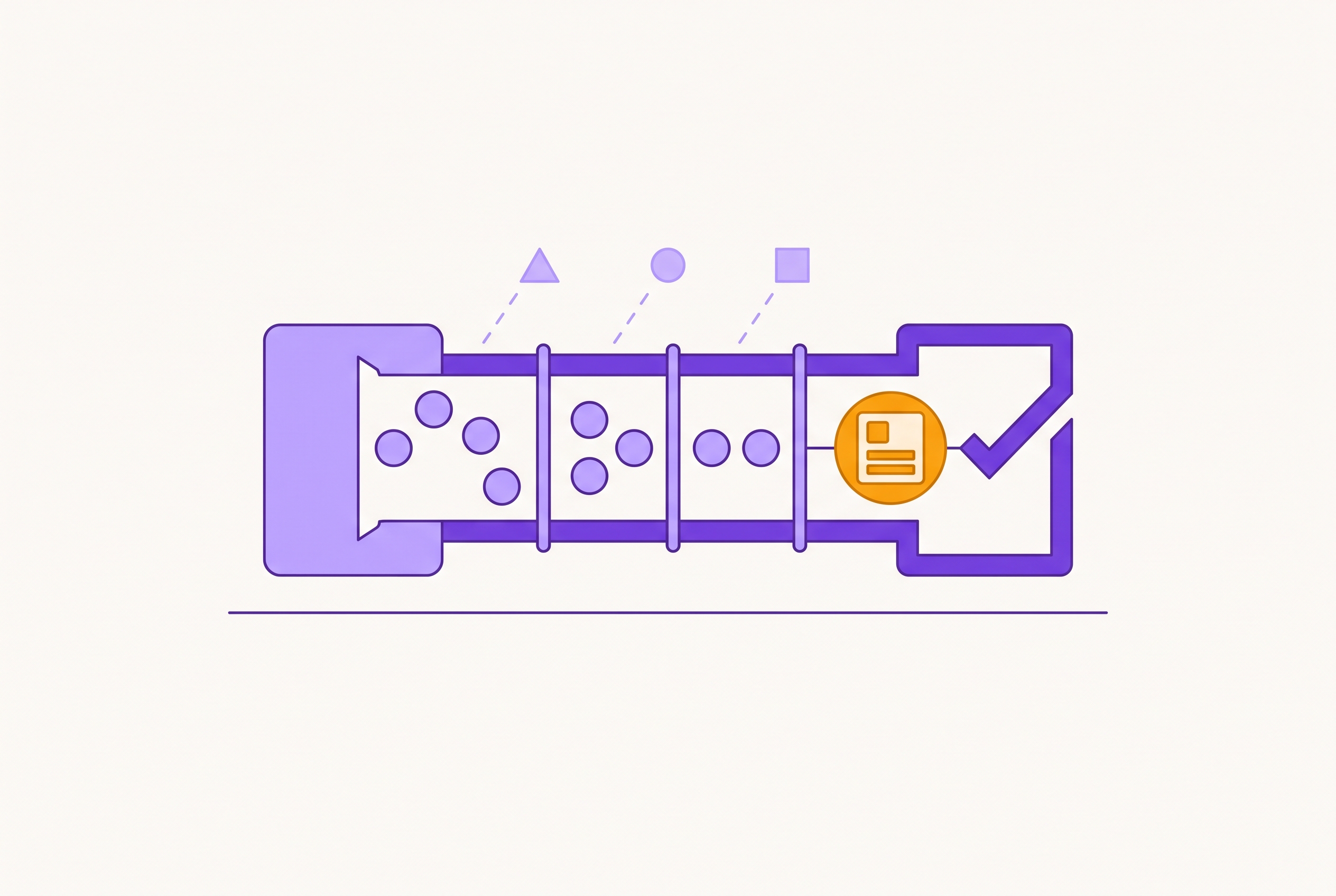
A busy-looking pipeline may still deliver almost nothing, often because its CRM was not designed to manage leads. Paid ads, social, web forms, live chat, and referrals can all feed in at once, but a generic CRM merely keeps the records instead of moving them through a lead-management workflow. That forces reps to sort the queue themselves, and once lead flow is heavy, the pattern breaks the same way every time: strong prospects wait while reps choose the next call by instinct, and poor matches consume time better spent on real opportunities. Departmental friction becomes obvious during the handoff. Marketing highlights impressive MQL figures while sales insists those prospects lack purchase intent, and without a shared definition of qualification, momentum dies at the transition point. Merely tagging pipeline phases onto a list of contacts does not constitute true lead management. What truly matters is if the system compels a workflow for each incoming prospect, rather than letting reps stash data until it gets noticed.
What a CRM must do for lead management
Lead management runs as a unified workflow that takes a lead from intake through vetting, prioritization, assignment, outreach, and attribution back to revenue. For lead-centric teams, a CRM should keep each step moving in a single flow rather than scattering the work across modules that merely sit behind the same sign-in. Handled properly, the workflow converts early demand into an orderly system that defines what qualifies a lead, who owns it, how fast outreach happens, and how it advances from initial interest to a won deal.
Each step in that chain relies on what came immediately prior. Qualification determines how well routing performs, while accurate intake data gives any score its meaning. Tracing origins requires labeling where a prospect came from upon arrival, instead of piecing it together afterward through recollection or speculation. Disconnected platforms collapse here: marketing software handles intake, spreadsheets track scores, an isolated automation layer manages routing, and whoever recalls the task records follow-ups by hand. Each gap where systems meet risks letting a prospect deteriorate.
Buyers should judge whether the CRM simply includes lead tools or actually manages the entire path from initial inquiry through attribution instead of pushing ownership back to reps at each step. When lead management is the CRM's foundation, the workflow stays in one place, keeping opportunities from vanishing between tools while showing the team what it needs to close more deals sooner without burying lead details in email threads, personal notes, or spreadsheet files. Next comes a step-by-step view of how prospects are captured and scored, how routing and pipeline visibility work, and how the sales-marketing handoff connects the full loop.
Multi-channel lead capture with pre-qualification gates at the point of entry
Intake is the first point where this kind of CRM parts ways with a generic one. A generic CRM gathers incoming leads across sources and funnels all of them to the same queue. In a lead-centric setup, prospects are screened and vetted before being allowed into that queue. The system is built that way on purpose: weak records are blocked before they enter, so reps are not left later to untangle poor data they should never have handled.
Practically speaking, a CRM ought to ingest them straight from web submissions, sign-up pages, inboxes, chat windows, and paid social into a single view, sparing anyone the chore of pulling a fresh export from every channel each week. Scoring logic should kick in the instant a lead arrives, sorting each one by behavior and fit so reps don't have to lift a finger. A lead who pores over three pricing pages before filling out a form ought to be tagged differently from one who downloaded one asset and vanished.
Letting this step slide creates problems that grow over time. If poor-fit leads or ones that have not been verified slip through the intake gate, reps end up chasing bad opportunities, reporting loses its footing, and routing rules built for clean data fail before they have a chance to help. Before handoff, each lead is assessed against firmographic criteria, vertical, organization size, location, intent behavior such as page views or content engagement, plus source channel before any rep gets ownership or any record enters the system. With automatic capture and instant contact syncing in place, lead information stays fresh because record changes are reflected across the CRM immediately, keeping outreach precise. Without that front-end screen, duplicates pile up, qualification becomes uneven, and the sales team loses sight of the leads worth prioritizing when volume spikes. To judge a CRM here, ask whether it can apply custom intake rules to screen or mark leads before assignment, instead of letting every lead in and pushing any cleanup to later.
Lead scoring that reflects conversion readiness, not just activity volume
Scoring takes over as soon as a lead lands in the system, and plenty of CRMs let their users down at this step without making any noise. If a model just tallies up activity like opened emails or viewed pages, it hands reps a ranked list that looks helpful but actually points them the wrong way. Someone who clicks around is not necessarily ready to buy. A CRM built for leads needs a model that pulls fit and intent apart, reading each one on its own.
Fit checks if a lead aligns with the ideal customer profile across factors like sector, headcount, position, and geography. Intent gauges if a lead's behavior signals they're actively considering buying. When evaluated independently, fit and intent call for distinct actions. Strong fit paired with weak intent calls for extended nurturing over time. High intent paired with weak fit means deprioritizing the lead before a rep invests real effort in a prospect unlikely to convert. A lead scoring high on both merits instant routing and swift initial outreach.
Teams constantly skip two features whose true value far exceeds how rarely they get used. Applying negative values to a profile makes sense when indicators suggest the prospect won't buy. For instance, prospects emailing from a rival firm's address are likely just gathering intel, so ignoring that clue artificially props up a rating that ought to drop. When interactions cease, a lead's ranking should gradually diminish. A prospect quiet for six months shouldn't rank equally with one active yesterday, regardless of matching past activity numbers.
AI-driven scoring builds on this by examining long sales cycles, identifying which accounts hold the most value, and prompting outreach when the timing is optimal. Predictive models trained on flawed records generate seemingly assured results that remain fundamentally untrustworthy. Predictive models carry forward whatever flaws already exist within their source records. When firmographic data is missing in large swaths, the model's confident-seeming predictions rest on foundations it cannot verify. Clean data at intake is a prerequisite, since the AI layer can only perform as well as the information it receives. Before selecting a scoring module, confirm whether score decay and negative scoring come standard or demand custom setup that teams typically postpone indefinitely.
Each step in that chain relies on what came immediately prior.
Automated routing and follow-up triggers that close the response-time gap
Even a well-scored lead turns into wasted effort if it does not get to the right rep soon enough to matter. Interest can drop off fast, so the CRM's role is to send that lead to the right owner and start follow-up before the window closes. The problem sits in the structure, not in sales discipline. Moving leads faster, making priorities obvious, and qualifying them sooner help an engaged buyer keep evaluating without extra delay, and that does not happen just because reps are told to push harder.
The system itself must apply go-to-market rules, using territory, deal size, product line, or intent signal to distribute work instead of depending on human handoffs or allowing reps to grab whichever prospects they prefer. Routing logic must tie directly to buyer actions such as submitting a form, opening an email, or viewing pricing, instantly triggering outreach like a message, task, call prompt, or booking link so nothing sits idle until someone notices. Follow-up sequences need to change in response to subsequent prospect behavior instead of sticking to one fixed cadence no matter the level of engagement.
Real examples make the pattern plain. With priority SLAs running in LeanData, SUSE lowered its mean response to an average of 2.68 business hours, reaching full SLA compliance before the quarter ended. At Zendesk, lead replies accelerated, hand assignment fell by 45%, and about 55 weekly hours returned from routing work the system could absorb. Together, the cases show that speed comes from CRM automation built into the workflow, rather than from pressuring people to hurry through a slow design.
When evaluating routing configurations, verify that teams can construct rules independently of engineering support, and confirm the CRM upholds SLAs by surfacing or promoting leads left unanswered beyond a set window. Missing that window means losing a prospect who was genuinely ready to buy. A well-chosen platform eliminates the uncertainty by always showing exactly which prospects require immediate focus.
Pipeline visibility that distinguishes a lead-centric CRM from a spreadsheet replacement
Once routing is complete, the pipeline becomes a lead's home, though such a visual tool remains truthful only if its underlying information avoids decay through self-sustaining precision. A lead-focused CRM maintains this precision by advancing stages automatically, capturing interactions as they happen, and flagging bottlenecks, freeing salespeople from manually logging each call.
With pipeline visualization, sales leaders can see deal movement as it happens and forecast from up-to-date information, rather than guessing which leads have stalled or where funnel leaks are occurring. Drag-and-drop stage controls are useful in a pipeline, but the bigger test is how well the CRM can move leads forward from logged activity without depending on manual edits that quickly become outdated. A combined pipeline view and time-ordered activity record, covering sent emails, replies, opens, clicks, notes, and tasks, gives a rep joining an active deal the full picture without searching filters or needing a coworker to fill them in. With that record in place, a newly assigned rep can continue the conversation smoothly, so the buyer does not have to restate details already shared.
Smart segmentation builds on this, grouping contacts according to how they act, where they came from, and who they are, so outreach hits the right people rather than handling everyone in the pipeline identically. Rewritten: What makes a visual pipeline genuinely useful is how soon it shows trouble: buyers should ask if the system itself alerts them when a contact stalls, or if a supervisor must dig around to find the issue before it's spotted. That gap, together with records syncing on their own, stage shifts setting tasks in motion automatically, and pipeline health that shows up without a hand-built report, marks the line between a CRM built around leads and a neatly arranged spreadsheet wearing a nicer interface.
Sales-marketing handoff infrastructure and closed-loop attribution
All the work built upstream, from capture and scoring to routing and pipeline visibility, only matters when the CRM reveals which campaigns influenced deals that closed. Counting MQLs is not enough. Accurate reporting requires sales and marketing to coordinate smoothly, yet that is precisely where numerous platforms stumble despite having every other component ready.
Three elements are essential for a successful transfer: instantly alerting sales when a lead hits SQL status, passing along every prior interaction within the prospect's file, and giving reps a reliable way to report back on qualification outcomes. Lacking this final feedback loop, marketers continue chasing higher numbers as reps repeat their grievances regarding prospect caliber, leaving both departments misaligned despite sharing identical software daily.
For Closed-loop attribution to work, the system needs to tag every lead with its source at capture so it can later trace won deals back to their origins. Genuine reporting must reveal how specific efforts, assets, and avenues shaped won revenue while mapping the complete sequence of buyer contacts rather than isolating just the opening or final touch. Forecasts indicate the lead management sector will rise to $25.7 billion in 2030 from a 2025 baseline of $17.48 billion, fueled by AI-driven scoring alongside CRM-integrated tools and real-time analytics. Vendors capturing this expansion will embed handoffs and attribution within foundational architecture instead of appending them to pipeline views as later additions.
Sources
- Lead Management Market Report 2026 - Research and Markets
Provided the market size figures cited in the attribution section, including the 2025 baseline and 2030 forecast for the lead management sector.
- 10 Lead Scoring Best Practices From Experts in 2026
Informed the discussion of lead scoring best practices, including the separation of fit and intent signals, negative scoring, and score decay.