AI CRM Data Enrichment Tools Compared
Static enrichment refreshes prospect data; dynamic enrichment keeps deals current.
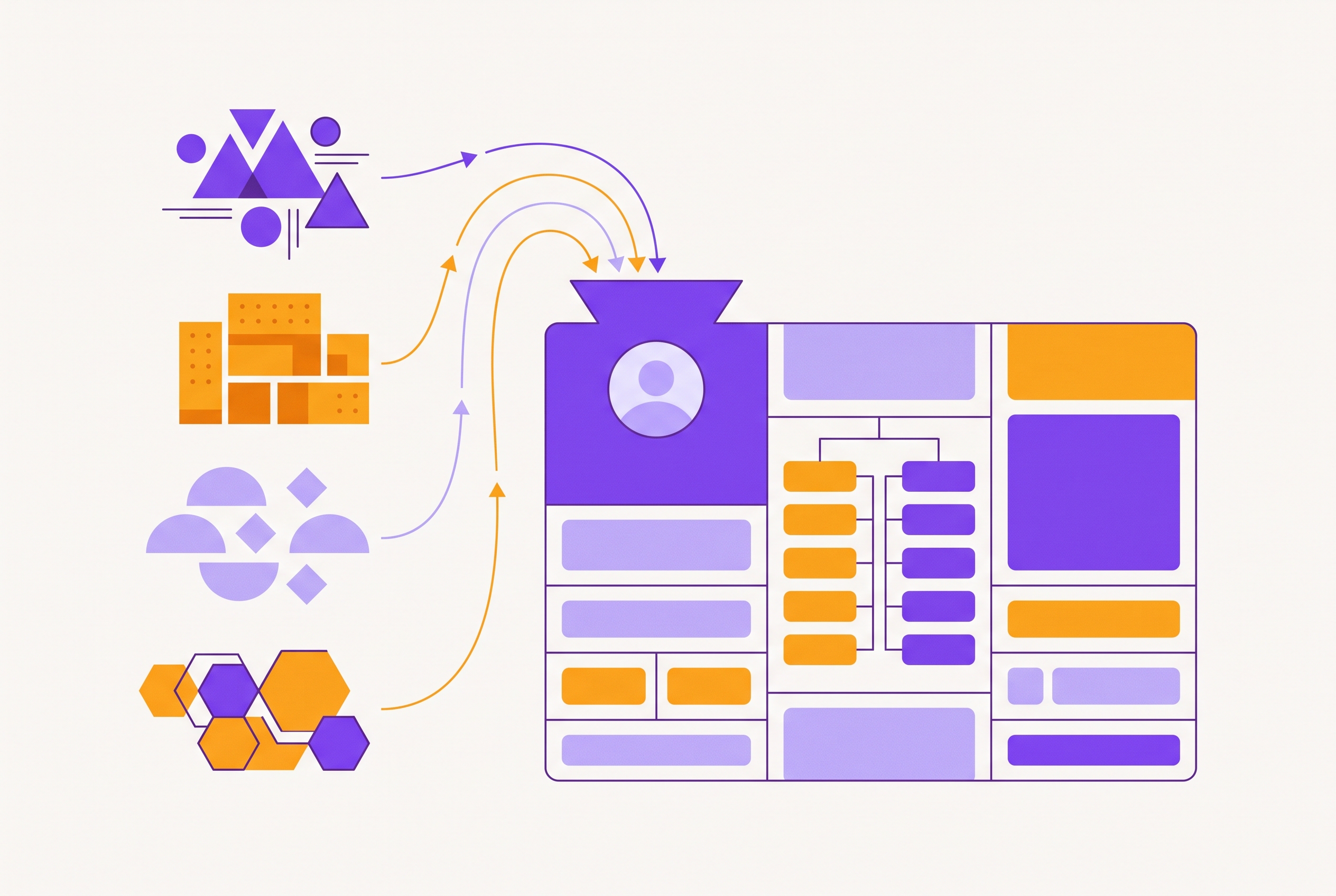
CRM data doesn't rot all at once. It leaks, field by field, as people change jobs, companies restructure, and titles get inflated at the next round of promotions, and most teams don't notice until a campaign underperforms or a forecast falls apart. That leak is the actual subject of this piece: which of four or five distinct enrichment problems you actually have, because the tools built for each one barely overlap.
The two fundamentally different things "enrichment" can mean
Ask five people what "data enrichment" means and you'll get five different answers. Two genuinely different things hide under one label.
Static enrichment appends or corrects fields using external databases: company size, industry, direct-dial numbers, verified emails, the technographic stack a target account runs. It answers "we don't know enough about this prospect," and it's the right tool for building lists, scoring inbound leads, and routing accounts to the right rep. The catch is that static enrichment is a snapshot. The data is only as fresh as the provider's last verification pass, and a provider that verified a contact's job title in March has no way of knowing that person got promoted, or laid off, or moved to a competitor in June.
Dynamic enrichment updates deal and relationship context from what's actually happening right now: call notes, email threads, meeting transcripts, all fed back into CRM fields like stage, next steps, and stakeholder maps. It solves "our CRM doesn't reflect what's actually happening in the deal," and it matters most for forecasting accuracy, because forecasting depends on stage-progression data that no third-party database has ever touched.
Here's where most buying decisions go sideways: teams conflate the two, then buy a static tool when the real pain is dynamic, or vice versa. A sales VP frustrated that pipeline reports don't match reality has a different problem than a thin contact database: reps' calls aren't writing themselves into Salesforce. Every section below traces back to this fork in the road.
The use-case framework: four enrichment problems that call for different tools
Once you separate static from dynamic, four concrete use cases fall out, plus one narrow edge case worth naming on its own.
There's building or refreshing outbound lists at scale, where coverage across a huge prospect universe is the whole game and single-source gaps quietly kill reach. There's compliant outreach into Europe or other regulated markets, where legal defensibility matters more than raw accuracy, because GDPR exposure is the risk that actually shows up on a balance sheet. There's enriching inbound leads already sitting in the CRM, where speed and integration depth beat coverage every time, since the record already exists and just needs its blanks filled in. And there's keeping deal-stage and relationship fields current through the sales cycle, which no static database can touch, because the only real source of that data is the conversation itself.
The fifth case is smaller and often overlooked: a team that needs one verified field, an email or a phone number, for a modest list. That's a quick, narrow problem worth solving without much overhead, and treating it like a platform decision wastes both money and time.
Every tool comparison from here forward is organized by which of these problems the tool was actually built to solve, measured against what its marketing page claims to solve.
When outbound reach is the problem: waterfall enrichment versus single-source databases
Single-source databases cover a meaningful chunk of any target list, but never all of it, and the gap shows up as unreachable prospects, not as an error message. Waterfall enrichment fixes that by querying multiple providers in sequence: if Provider A comes back empty, the workflow tries Provider B, then C, stacking coverage instead of betting everything on one vendor's crawl schedule.
Clay is the dominant waterfall option right now. It queries more than a hundred data providers through a spreadsheet-style workflow builder, and its AI research agent, Claygent, handles the custom data points no structured database carries, the sort of thing you'd otherwise gather by hand off a company's About page or a LinkedIn post. Pricing runs on tiers of consumable credits, so volume-heavy teams need to model usage before they commit, not after the invoice arrives. Clay leans toward technical teams: it wants a RevOps engineer or someone comfortable building pipelines, because there's no built-in sending or dialing layer; enrichment is the whole job. Community benchmarks put its bounce rates noticeably below what teams see running Apollo alone, which tracks with what you'd expect from stacking sources instead of trusting one.
Apollo.io takes the opposite bet: one big B2B database, bundled with email sequencing, a dialer, and AI personalization, all at a price point that's genuinely accessible for an early-stage or small SDR team. The tradeoff is that single-source accuracy runs lower than a waterfall-enriched list, which matters a lot once you're sending in volume and bounce rate starts eating your sender reputation. In practice, plenty of teams run Apollo as one of the providers inside Clay's waterfall, then export the cleaned-up records back into Apollo to actually send. That means paying for both. It also means capturing waterfall accuracy without giving up Apollo's engagement tooling, which for a lot of teams is worth the double subscription.
ZoomInfo sits at the enterprise end: the largest continuously verified B2B database by contact and company count, with native, real-time sync into HubSpot and Salesforce, so enrichment lands in the CRM automatically instead of through a CSV export nobody remembers to run. Its depth is strongest in North America; European coverage is thinner than what Cognism offers, which matters a lot if your outbound motion isn't US-only. It's an enterprise price point, and the value generally shows up at volume, meaning if you're running a five-person SDR team, you're probably buying more database than you need.
The heuristic that actually cuts through this: don't compare list prices. Model cost per reachable contact, waterfall against single-source, using your own list. That's the number that tells you which one is actually cheaper.
When regulatory compliance is the constraint: enrichment for European and regulated markets
GDPR compliance shapes the legality of your outreach in markets where getting it wrong can carry real financial and reputational risk, so it deserves your attention well before vendor selection becomes a checkbox exercise. The relevant markers to check aren't abstract: GDPR and CCPA alignment, SOC 2 accreditation, TPS and Do Not Call screening by country, and notified database status.
Cognism has built its whole positioning around this. GDPR compliance is embedded by default, with governance applied across more European markets than most competitors bother with, and its Diamond Verified Phone Data uses a multi-step process combining AI checks with manual verification, producing mobile numbers with materially higher connect rates than unverified alternatives. It screens TPS and Do Not Call lists across more countries than ZoomInfo does, and one community-reported head-to-head test found Cognism returning cleaner results and a lower bounce rate against both ZoomInfo and Apollo on a matched list. Worth flagging: that's one data point from an informal comparison, not a controlled study, so treat it as directional rather than conclusive. Price-wise, Cognism lands around ZoomInfo's median small-team contract, positioned toward the higher end rather than the budget tier.
ZoomInfo does carry GDPR and CCPA compliance, though its Do Not Call screening covers fewer countries than Cognism's, which becomes relevant fast for any team with real coverage across non-US European markets rather than just a UK presence bolted onto a US motion.
For this use case, compliance should gate your shortlist before anything else gets evaluated. A tool with better coverage that creates legal exposure carries a cost that outweighs its benefits, disqualifying it regardless of how much database depth it offers.
Once you separate static from dynamic, four concrete use cases fall out, plus one narrow edge case worth naming on its own.
When the problem is enriching inbound leads already inside the CRM
A lead fills out a form. You get a name, an email, a company. Everything downstream, routing, scoring, personalization, depends on fields that simply don't exist yet, and the tool that fixes this needs to be fast, automated, and already wired into whatever CRM you run, rather than built for outbound-scale coverage.
HubSpot Breeze Intelligence, the product formerly known as Clearbit, is the obvious answer for HubSpot-native teams. HubSpot acquired Clearbit in late 2023, and it's been folded into Breeze Intelligence since, so evaluating standalone Clearbit today really means evaluating its successor. As of the 2026 pricing shift, standard firmographic fields, revenue band, industry, employee count, come included free with HubSpot Starter and above, no separate credit purchase required for the baseline. Implementation is about as frictionless as this category gets: no separate login, no field-mapping project, no API key to babysit. Its ceiling shows up fast for teams with complex intent-signal needs, multi-CRM environments, or an outbound motion to run, because Breeze Intelligence was never built to be a full sales intelligence stack.
Demandbase Data Integrity targets the enterprise end of the same problem, working across Salesforce, HubSpot, or Marketo to update firmographics, technographics, contact data, and intent signals on a scheduled cadence rather than a one-time pull. It validates against a large number of data sources before anything reaches the CRM, and its technographic depth, tracking technologies in the tens of thousands, is a real differentiator for ABM programs that need to know exactly what stack a target account runs. Its intent-signal layer, built on a large multilingual keyword set, connects enrichment to active buying behavior, which matters if the enrichment is meant to trigger outreach rather than just tidy up a record. Its natural home is enterprise ABM, and it's generally not the right fit for high-velocity SMB inbound.
If you're on HubSpot and the job is baseline inbound enrichment, Breeze Intelligence is the path of least resistance. If you need intent data or run a multi-platform stack, Demandbase earns its price tag.
When the problem is deal data, not contact data
A CRM stage field can go stale even when every contact record in it is perfectly accurate. The stage field's staleness has nothing to do with the contact data sitting beside it: a rep had a great call, took notes on a legal pad or nowhere at all, and never updated the record. No database vendor on earth fixes that, because the data being enriched doesn't live in any external database. It lives in the conversation.
AI conversation intelligence tools, the call and meeting recorders that write back into the CRM, go straight at this. They transcribe and summarize calls, then auto-populate fields like MEDDIC or MEDDPICC criteria, next steps, objections raised, and stakeholders mentioned by name, turning an hour of unstructured talk into structured CRM data without a rep touching a keyboard afterward.
McKinsey research notes that delivering the right interaction at the right time, something that depends entirely on accurate deal-stage data, correlates with meaningful gains in both revenue and customer satisfaction. The implication is worth pausing on: dynamic enrichment carries a direct line to revenue, well beyond the ops hygiene work of making dashboards look tidier, because a forecast built on stale stage data reflects guesswork rather than reality.
So before buying anything in this category, ask the blunt question: is the complaint "we don't have enough contact fields," or is it "the fields we have are wrong"? Those are different problems, and the tool categories that treat them don't overlap even a little.
When the requirement is narrow: point solutions for single-field enrichment
Not every enrichment problem deserves a platform. Sometimes the requirement really is one sentence long: find verified emails for a list of domains, or grab a phone number off a LinkedIn profile before a call. Buying a waterfall platform for that is overkill relative to the actual task.
Hunter.io does exactly one job, finding and verifying email addresses by domain, and does it at a straightforward price with none of the workflow-builder overhead a platform like Clay requires. For a team whose entire enrichment need is "we need emails for this list," that's the whole assignment, and adding complexity on top of it just adds a maintenance burden nobody asked for.
Lusha and Kaspr live one rung down, at the individual-rep level: pull contact details off a LinkedIn profile straight into the CRM. Kaspr undercuts Lusha on price and works fine for one-off prospecting by an individual contributor. Their value sits with individual reps rather than data strategy; a team that tries to run enrichment at scale through them will see the cracks show.
There's a quieter argument for point solutions too: they're a clean starting point. If you start on Hunter.io and eventually outgrow it, you'll generally have a far easier migration path than if you bought an enterprise platform on day one and used ten percent of it. If your requirement fits in one sentence, a point solution is probably enough. If it needs three clauses and an "and," you're back in platform territory.
How to run a use-case-first evaluation without getting pulled into feature-checklist mode
The instinct in most buying processes is to open a spreadsheet, list every feature every vendor offers, and score them against each other. Resist it. Feature checklists reward vendors who've simply listed more things, disconnected from whether those things solve your specific problem, and enrichment tools in particular are built around fundamentally different assumptions about what "enrichment" even means, as the first section of this piece laid out.
Start instead by diagnosing which of the four core use cases, or the narrow fifth, actually describes your pain. Is the complaint about reach into a cold list, legal risk in a regulated market, inbound leads with blank fields, or deal-stage data that quietly rots between calls? Each answer eliminates most of the vendors on the market before you've looked at a single pricing page, which is the entire point of a use-case-first evaluation: it narrows the field by disqualification rather than by comparison.
Only after that diagnosis does it make sense to compare specific tools within the surviving category, and even then, the comparison should run on the metric that matters for that use case specifically: cost per reachable contact for outbound, compliance footprint for regulated markets, integration friction for inbound, and rep-hours saved for dynamic enrichment. A feature checklist measures who checked the most boxes, a count that rarely lines up with who solves your actual problem.
Sources
- https://www.demandbase.com/blog/b2b-data-enrichment-tools/
Informed the description of Demandbase Data Integrity's technographic depth, multilingual intent signals, and enterprise ABM positioning.
- https://www.apollo.io/insights/apollo-vs-clay
Provided context on the Apollo-versus-Clay comparison, including how teams use Apollo's engagement tooling alongside Clay's waterfall enrichment.
- https://www.salesforge.ai/blog/clay-vs-apollo
Contributed detail on Clay's waterfall enrichment approach, Claygent, and the practical pattern of using both Apollo and Clay together.
- https://salesmotion.io/clay-vs-apollo
Supplied comparative detail on bounce rates and the workflow of enriching in Clay then exporting back to Apollo for sending.
- https://www.enrich.so/blog/clay-vs-apollo
Informed the characterization of Clay's credit-based pricing model and its orientation toward technical RevOps users.
- https://www.cleanlist.ai/blog/2026-03-19-clay-vs-apollo
Provided detail on Apollo's bundled toolset including sequencing, dialer, and AI personalization at an accessible price point for early-stage teams.