CRM Strategy Examples from Real B2B Companies
Account-based CRM strategy captures the buying group, not just individual contacts.
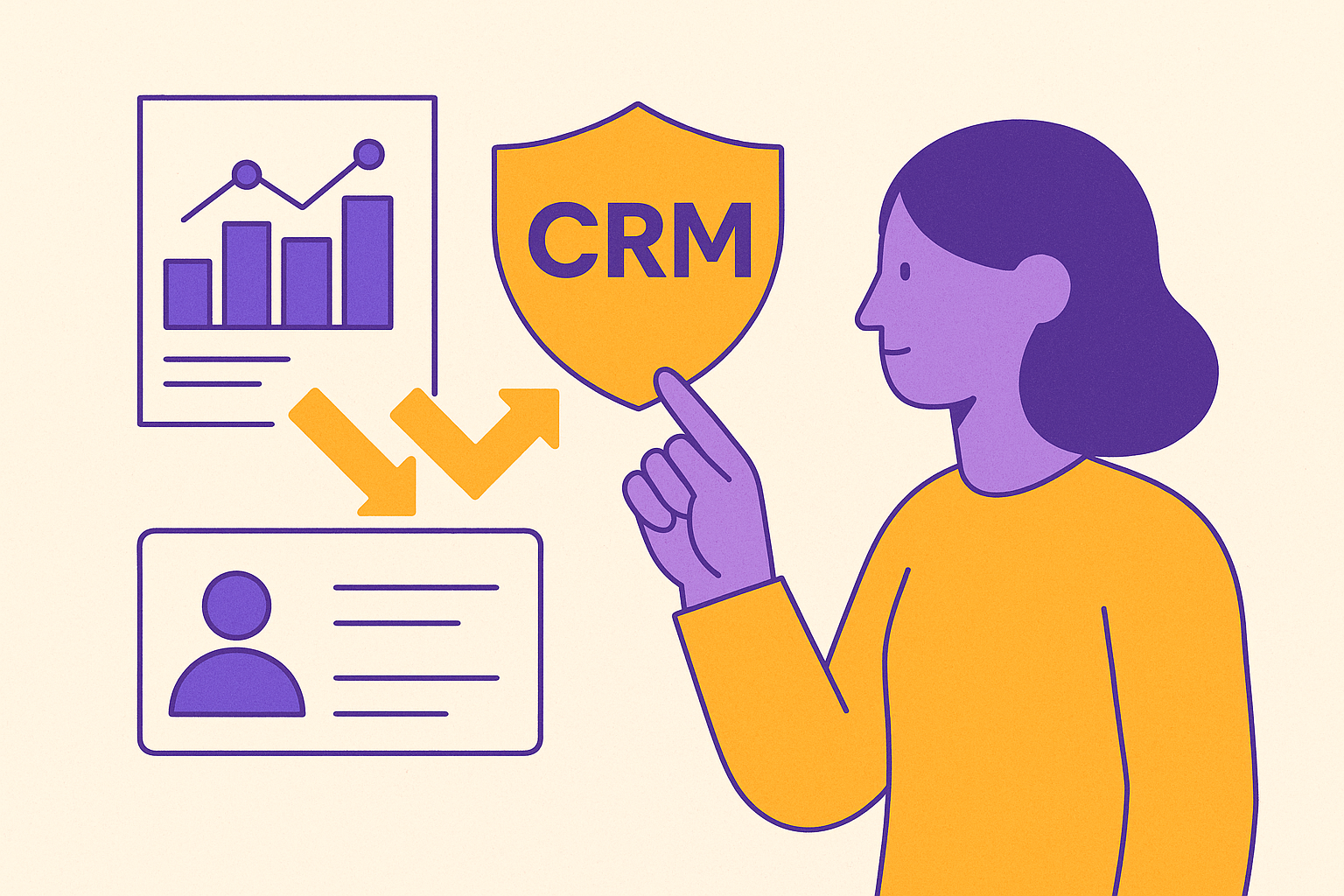
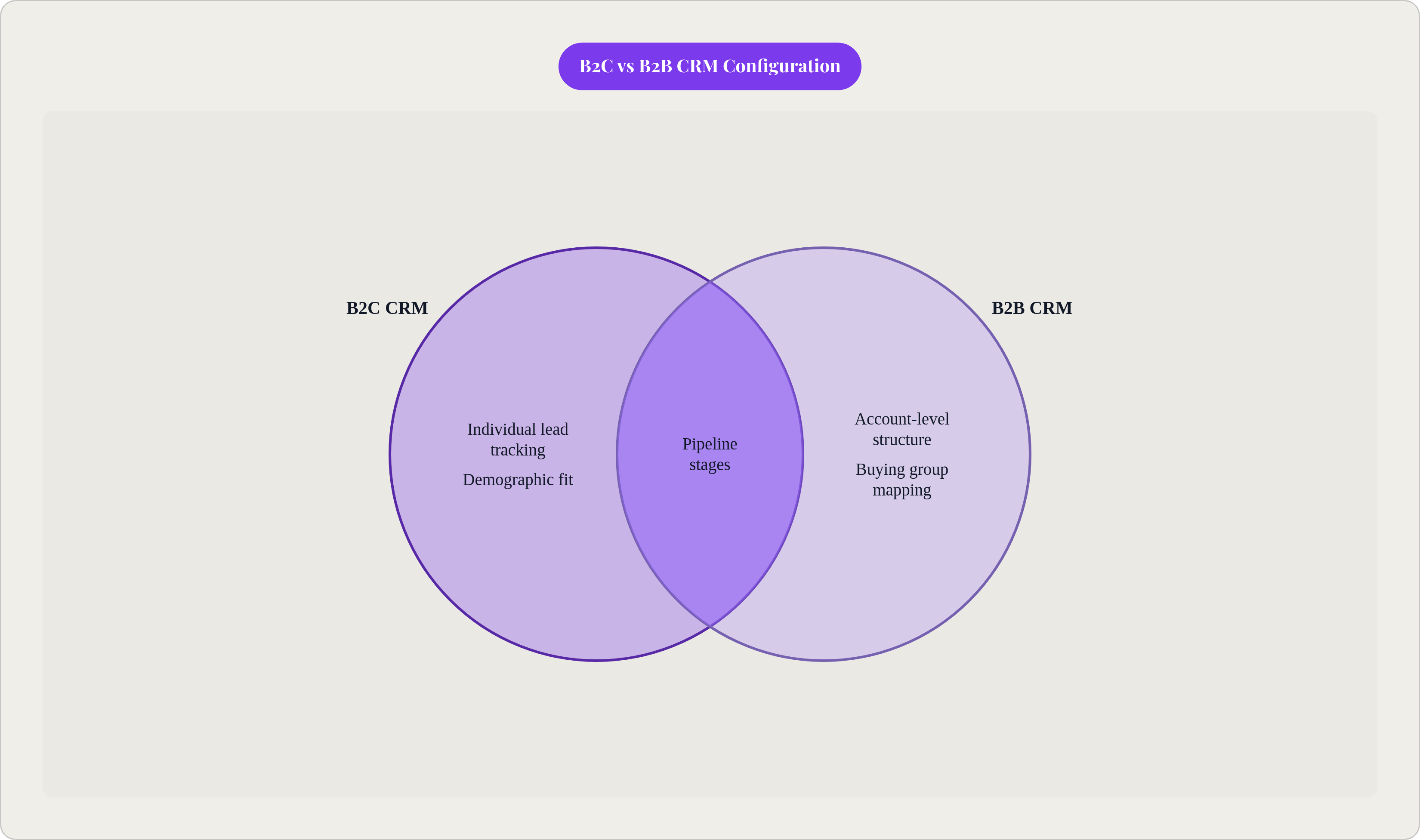
The default CRM configuration tracks individual leads. That works fine in B2C, where one person makes the call. In B2B, it's structurally wrong. Enterprise buying groups routinely involve six to ten decision-makers, each with different concerns, different objections, and different stakes in the outcome. Tracking contacts in isolation means the CRM shows you a person when what you actually need to understand is an organization. Think of it like trying to understand a forest by studying a single leaf.
Account-level CRM thinking means every contact ties back to a parent company record. Deal history, conversation logs, support tickets: all of it surfaces at the account level, not buried inside individual profiles. More importantly, the buying group gets mapped. Economic buyer, technical buyer, internal champion, potential blocker, each with their own engagement history visible in one place.
AVEVA is the clearest example I've seen of this done properly at scale. The industrial software company won Forrester's B2B Program of the Year in 2025 for an account program built entirely around this logic. GSK was already a customer. The insight wasn't that they needed to win the account; it was that most of the account remained untouched. AVEVA identified eight specific decision-makers inside GSK as "Power Players" and built personalized assets for each one. The result: 46 new relationships inside GSK's buying group, 2,000 visits to a personalized GSK microsite, £7 million in active pipeline, and GSK expanding from one AVEVA platform to three.
That gap (the whitespace inside an account you technically already own) is where most B2B revenue goes uncaptured. Companies track the contacts they already know and call it coverage. Stakeholders who remain unreached go unmapped. And critically, that mapping has to live inside the CRM. Not in a separate account planning spreadsheet that nobody updates and nobody else can find. Once it's in the system, it's usable. Once it's a document, it's archaeology.
How segmentation decisions determine which accounts actually get worked
Loading accounts into a CRM tells nobody which ones to pursue. That requires a segmentation decision, and most companies either avoid making it explicitly or make it once and never revisit it. Both failures produce the same result: the CRM becomes a database that salespeople work around rather than from.
ICP-based segmentation (meaning a definition of the Ideal Customer Profile with enough firmographic specificity to actually filter the list rather than just describe it in general terms) is the most reliable first lever. One cybersecurity SaaS company shifted from broad lead generation to targeting mid-market financial services firms with more than 500 employees and legacy security infrastructure; enterprise win rate reportedly moved from 12% to 31% within two quarters. The CRM didn't change. The accounts in the system didn't change. What changed was the decision about which ones were actually worth pursuing, and the organizational discipline to let that decision govern behavior rather than reverting to working every name in the database.
For companies in wholesale and manufacturing, where customer bases are large and transactional and individual account management doesn't scale, RFM segmentation offers a different model. Recency, Frequency, Monetary value: it segments customers by actual purchase behavior rather than demographic fit. The practical value isn't categorization for its own sake; it's early detection. An account whose spending is beginning to drift shows up in the data before the churn completes, which creates a window for reactivation that would otherwise never open. RFM catches customers on their way out the door — before they've already left the building.
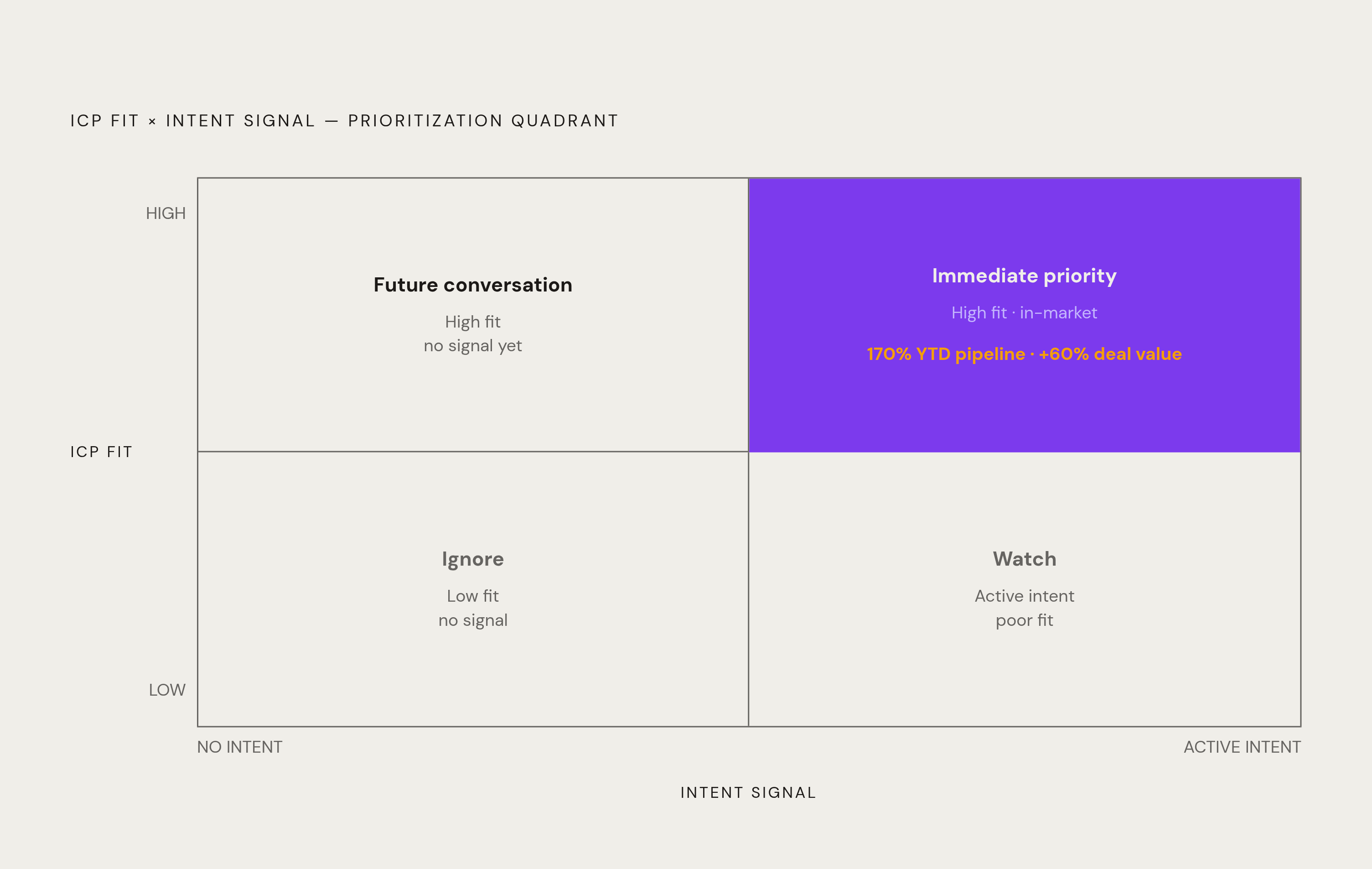
Intent data adds a third layer, and Mimecast demonstrates what it's worth when applied with discipline. By layering intent signals onto ICP accounts (meaning accounts already matching the profile but also actively researching solutions in their category), Mimecast reached 170% of their year-to-date pipeline target, and marketing-sourced ABM opportunities saw a 60% average deal value uplift. The distinction matters: intent data doesn't replace ICP segmentation, it tells you when to act on it. An account that fits your profile but isn't researching anything right now is a future conversation. An account that fits and is actively in-market is an immediate priority. Those two accounts should look different inside the CRM, and in most deployments they don't.
The failure mode I see most often is treating segmentation as a one-time configuration task. Firmographic segments go stale. Behavioral signals shift constantly. The companies that actually use segmentation well treat it as a live input, something responsive to what accounts are doing right now, not what they looked like when someone first entered them into the system eighteen months ago.
Pipeline visibility as a management decision, not a reporting feature
Most CRM implementations inherit default pipeline stages without anyone questioning them. Lead, Qualified, Proposal, Closed. Those stages describe what a seller did, not where a deal actually is. That distinction matters more than most sales leaders are comfortable acknowledging.
"Proposal sent" is a seller action. It tells you what the rep did last Tuesday. "Proposal reviewed by economic buyer" is a buyer signal. It tells you where the deal actually stands. Only the second one predicts close with any reliability. When stage definitions require a buyer action to advance rather than a seller action, pipeline data becomes genuinely useful for forecasting. When they don't, the pipeline becomes a record of activity with no real relationship to outcome, and leadership starts making decisions based on numbers they've quietly stopped trusting.
The verification question follows directly from this: who confirms that a stage transition happened, and what evidence does it require? These are management decisions. No platform configures them for you. A VP of Sales who actually interrogates CRM stage data will discover that deals in one vertical close significantly slower than deals in another, or that certain reps are advancing stages prematurely to make their numbers look healthier than they are. That finding only surfaces if stage data is clean, consistently entered, and structured to reflect how deals actually move through that specific business.
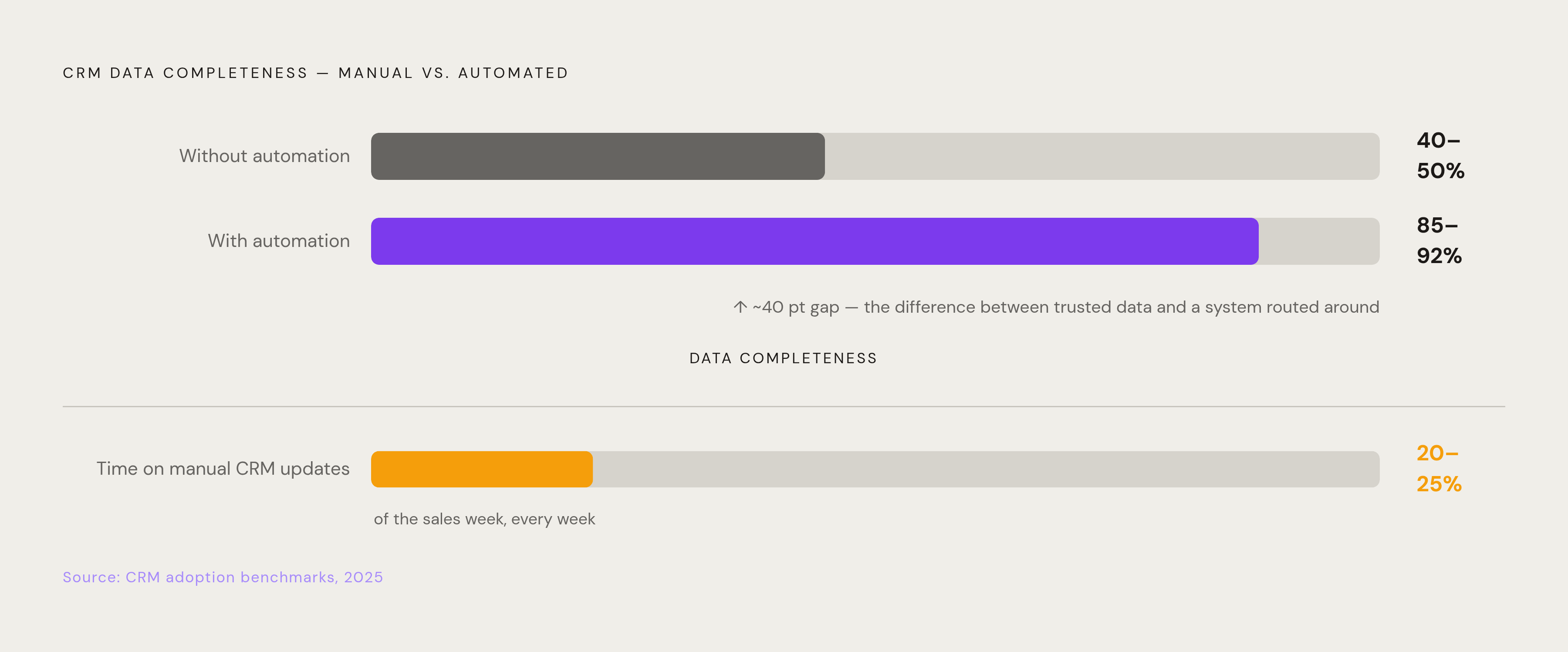
The data completeness problem is real and consistently underestimated. Sales teams in 2025 were spending somewhere between a fifth and a quarter of their working week on manual CRM updates. Organizations that automated data capture achieved completeness rates in the mid-to-high 80s and 90s; without automation, the industry average sat roughly in the 40 to 50 percent range. That gap is the difference between a system leadership can trust and one they quietly route around. A B2B wholesale company that implemented pipeline automation saw a 25% improvement in sales efficiency, and the gain had nothing to do with the product or the team structure. It came from eliminating manual handoffs and the lag they created between a deal moving and the CRM reflecting that movement.
Pipeline visibility only functions as a management tool when the data going in is reliable. Stage definitions and data entry discipline are the preconditions. Treating them as afterthoughts is how you end up with a very expensive spreadsheet.
Turning the CRM into a lifecycle system, not just a sales tool
In B2B, revenue doesn't come primarily from new logos. It comes from what happens after the first sale: renewals, expansions, upsells, the compounding value of an account that keeps growing. A CRM configured only for acquisition is structurally misaligned with where the majority of revenue actually originates.
Lifecycle management inside a CRM means renewal dates are treated as pipeline objects, not calendar reminders living in a spreadsheet someone checks occasionally. It means customer health indicators, product usage, support ticket volume, and engagement frequency feed into account records so account managers see the full picture rather than just the current open opportunity. It means expansion triggers are systematized: when an account's usage or headcount crosses a threshold, the system surfaces that to the right person rather than waiting for someone to happen to notice.
Databox used HubSpot CRM to automate lead scoring and nurturing workflows, logging every customer interaction from first form submission through renewal inside one system. The result was a 40% increase in qualified leads and meaningfully faster follow-up because the sales team had real-time visibility into what prospects and customers were actually doing. The underlying logic is simple: if the full relationship lives in the CRM, the team sees the full relationship. If parts of it live elsewhere, the team works with a partial picture and makes consequential decisions accordingly.
Heineken offers a non-SaaS example of the same principle operating at a different scale entirely. Using Microsoft Dynamics CRM to manage its distribution network, the company built 360-degree account views, automated order processing, and coordinated field sales across thousands of retail partners with ongoing ordering relationships. The CRM became the infrastructure for maintaining those relationships, not a tool for tracking new business pitches. That reorientation changes what the organization actually optimizes for, which is the real shift.
The decision that separates a lifecycle CRM from a sales CRM is whether customer success and account management have their own objects, workflows, and dashboards inside the same system, or whether they operate outside it. When they operate outside it, the handoff from sales to post-sale becomes a data transfer problem. Context disappears, information gets lost, and the customer experiences a discontinuity that the internal team often cannot even see because they're looking at different systems. That invisibility is the problem. The customer feels the gap. The team has no idea the gap exists.
What the companies that get the most from CRM actually do differently
The gap between CRM adopters and CRM high-performers has very little to do with which platform they selected. It has almost everything to do with what they decided before and during implementation, and whether anyone in leadership was willing to enforce those decisions afterward.
The commonalities across strong deployments are not mysterious. High-performing companies defined what a good account looks like before configuring the system: ICP first, tool setup second. They assigned ownership at the account level, not just the lead level. They built the post-sale relationship into the same system as the pre-sale process. They treated pipeline stage definitions as living management decisions, subject to revision as actual deal patterns became clearer over time. None of this is technically complex. Most of it just requires someone to make a call and hold the organization to it, which turns out to be the harder part.
The failure pattern is the inverse, and it's remarkably consistent. A company configures the CRM to mirror its existing process, however dysfunctional that process already is, and then registers surprise when results don't improve. The tool amplified the process. It amplified exactly the wrong one. Garbage in, gospel out.
Salesforce research indicates that only about 23% of B2B marketers can accurately attribute revenue to specific channels. Most CRM implementations were never designed with attribution in mind, which means the system cannot answer the questions leadership actually needs answered. That's a structural problem rooted in decisions (or non-decisions) made during setup, not a software limitation.
Unified lifecycle data is where the industry is heading; most B2B leaders cite getting a complete view of customer interactions as their primary CRM priority over the next several years. But arriving there requires the foundational decisions to already be in place: account structure, segmentation logic, stage definitions, lifecycle ownership. Without those, adding more data to the system produces more noise, not more clarity. The software will faithfully amplify whatever decisions sit underneath it. It has no opinion about whether those decisions are any good.